Best Staycations
20 February 2026
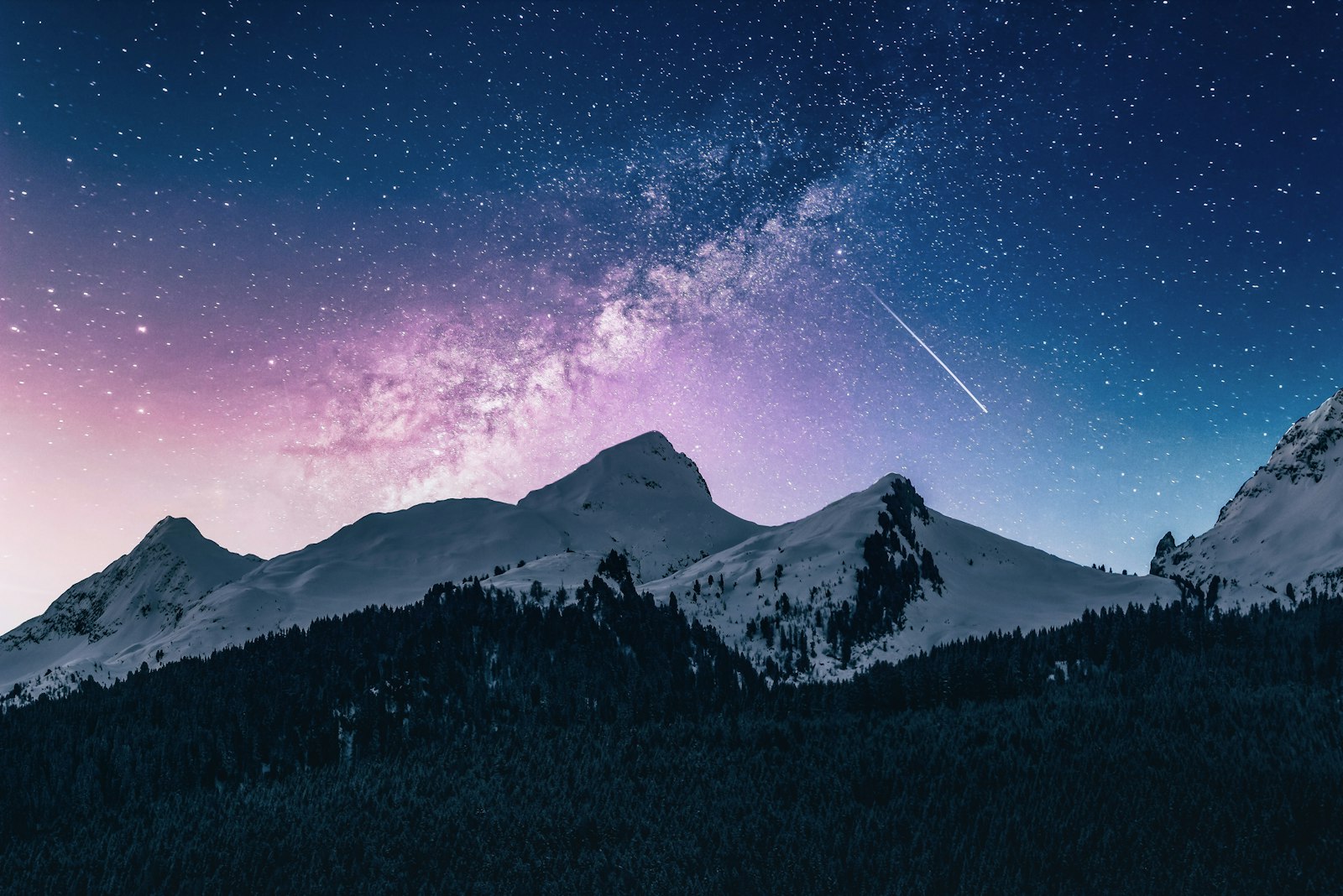
On a clear night, far from the orange glow of towns and cities, the sky reveals itself in a way that most of us have never experienced. The Milky Way arcs from horizon to horizon. Satellites trace silent lines across the darkness. And the sheer number of stars, thousands upon thousands of them, is so overwhelming that it takes your breath away. This is what a truly dark sky looks like, and in Britain, you have to travel to find it.
Light pollution has rendered the night sky invisible to the majority of the UK population. Over eighty percent of people in Britain live under skies so bright that they have never seen the Milky Way. But in a handful of protected areas, designated as International Dark Sky Reserves and Dark Sky Parks, the darkness is preserved. These are places where the night sky looks as it has for millennia, and where stargazing is not just possible but extraordinary.
This guide identifies the best places to stay near each of Britain's Dark Sky Reserves, and offers practical advice on how to make the most of a stargazing break.
Britain's Dark Sky Reserves
Northumberland International Dark Sky Park
Northumberland holds the distinction of having the largest area of protected dark sky in Europe. The Dark Sky Park encompasses Kielder Water and Forest Park, where light pollution is virtually non-existent. The Kielder Observatory offers guided stargazing events throughout the year, led by astronomers who combine deep knowledge with genuine enthusiasm.
For accommodation, Langley Castle, a fourteenth-century tower house set in ten acres of woodland, offers the combination of historic atmosphere and proximity to the darkest skies. The castle is a thirty-minute drive from the observatory, and on clear nights the sky above the castle grounds is dark enough for excellent stargazing without leaving the property.
Brecon Beacons International Dark Sky Reserve
The Brecon Beacons became the first International Dark Sky Reserve in Wales in 2013, and the skies above the mountains remain among the darkest in southern Britain. The town of Brecon itself is small enough to generate minimal light pollution, and from the peaks and ridges of the national park the views are spectacular.
The Coach House Brecon is an excellent base, offering boutique accommodation in the heart of the park. Lake Country House Hotel and Spa, set in fifty acres of grounds, provides a more luxurious option with the space and darkness for excellent stargazing from the hotel's own gardens. Pale Hall in Snowdonia, while technically outside the Brecon Beacons, offers access to similarly dark skies in a setting of extraordinary grandeur.
Exmoor International Dark Sky Reserve
Exmoor was the first place in Europe to be designated an International Dark Sky Reserve, and it remains one of the finest locations in southern England for stargazing. The combination of Atlantic air, minimal light pollution, and open moorland creates conditions that are close to ideal.
The area around Exmoor is well served by characterful accommodation. Foreland Lighthouse Keeper's Cottage offers an unparalleled setting on the Devon coast, where the absence of any artificial light makes the stars seem impossibly bright. The lighthouse's position, at the most northerly point of Devon, means that there are no lights to the north, east, or west, only the beam of the lighthouse itself sweeping overhead.
Snowdonia National Park
Snowdonia's Dark Sky Reserve status covers a vast area of mountainous terrain in North Wales. The park's combination of altitude, remoteness, and minimal development makes it exceptional for stargazing, though the weather can be unpredictable.
Pale Hall, a Victorian country house set in its own grounds near Bala, is our preferred base for Snowdonia stargazing. The hotel is surrounded by the kind of deep darkness that is increasingly rare in Britain, and the grounds provide excellent viewing conditions. Plas Dinas Country House, closer to the Snowdon massif, offers a more intimate experience with equally dark skies.
How to Plan a Stargazing Break
Timing
The darkest skies occur during the new moon phase, when there is no moonlight to compete with the stars. Check a lunar calendar before booking, and aim for a stay that coincides with a new moon or a thin crescent. The hours between midnight and dawn are typically the darkest, as ambient light from distant towns fades as people go to bed.
Winter offers the longest nights and some of the clearest skies, but also the coldest conditions. The winter Milky Way, visible from November to February, is spectacular but demanding to observe in sub-zero temperatures. Dress warmly and bring a hot flask.
Summer nights are shorter but warmer, and the summer Milky Way, visible from June to August, is particularly dramatic, arching directly overhead. The Perseid meteor shower in August is a highlight of the stargazing calendar, with shooting stars visible at a rate of up to one per minute at peak activity.
Equipment
You do not need a telescope to enjoy dark skies. In fact, the naked eye is the best instrument for appreciating the full sweep of the Milky Way and for spotting meteors. Binoculars are a useful addition, revealing detail in nebulae, star clusters, and the surface of the moon that is invisible to the unaided eye.
If you are serious about stargazing, a pair of 10x50 binoculars is the ideal starting point: powerful enough to reveal deep-sky objects, light enough to hold comfortably, and inexpensive enough that they represent a modest investment. A star chart or stargazing app will help you identify what you are looking at.
Allow at least twenty minutes for your eyes to adapt to the darkness. Avoid looking at your phone screen, which will destroy your night vision. If you need light, use a red-filtered torch, which preserves your dark adaptation.
Weather
Clear skies are essential for stargazing, and the British weather can be a formidable adversary. Check the forecast carefully before you travel, and be prepared to adjust your plans. The Met Office provides a cloud cover forecast that is useful, and the Clear Outside app gives detailed predictions for astronomical conditions at specific locations.
The best stargazing weather often occurs during cold, high-pressure systems in winter, when the air is dry and stable. These conditions can produce nights of extraordinary clarity, with stars visible almost to the horizon.
Why Dark Skies Matter
The campaign to preserve dark skies is about more than aesthetics, though the beauty of a truly dark sky is a powerful argument in itself. Light pollution affects wildlife, disrupting the behaviour of nocturnal animals, migratory birds, and insects. It wastes energy, with a significant proportion of outdoor lighting directed upwards into the sky rather than downwards where it is needed. And it severs our connection with the cosmos, denying us a perspective that has inspired art, science, and philosophy for as long as humans have looked upwards.
Staying in a Dark Sky Reserve is an act of appreciation for something that our ancestors took for granted and that we are in danger of losing. It is also one of the most remarkable things you can do on a British break. Wrap up warm, step outside, look up, and prepare to be astonished.